Delta Connection DL3543 Emergency Landing: Full Story, Timeline, and Passenger Safety

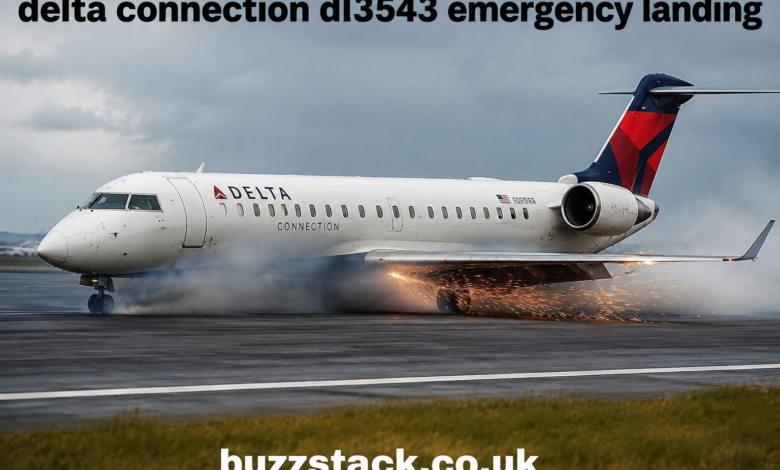
The delta connection dl3543 emergency landing gained attention because a normal regional flight changed course soon after leaving Minneapolis. What began as a short trip to Chicago Midway became a safety-focused return that showed how quickly aviation crews respond when something unusual appears during flight.
| Quick Bio Table | Details |
|---|---|
| Flight Number | DL3543 |
| Airline Brand | Delta Connection |
| Reported Operator | SkyWest Airlines |
| Departure Airport | Minneapolis-Saint Paul International Airport |
| Planned Destination | Chicago Midway International Airport |
| Incident Date | July 7, 2025 |
| Aircraft Type | Embraer ERJ 170-200 LR / E175 family |
| Registration | N259SY |
| Emergency Code | Squawk 7700 |
| Final Outcome | Safe return to Minneapolis |
Delta Connection DL3543 Emergency Landing Overview
The delta connection dl3543 emergency landing was reported after the aircraft turned back shortly after takeoff. The flight had been scheduled as a short regional service from Minneapolis to Chicago, a route commonly served by smaller jets under major airline brands.
The aircraft did not continue to its planned destination after the crew detected a situation that required caution. Instead, the pilots chose to return to Minneapolis and request priority handling from air traffic control.
That decision may sound dramatic, but in aviation it is often the safest and most professional choice. A return landing allows crews and maintenance teams to inspect the aircraft rather than risk continuing with an uncertain issue.
What Happened During Delta Connection DL3543 Emergency Landing
Public reports say the aircraft stopped its climb at around 21,000 feet and turned back only minutes after departure. The crew then used emergency code 7700, which alerts controllers that the aircraft needs priority support.
The plane returned to Minneapolis and landed safely on runway 12R around 37 minutes after departure. After landing, it taxied to a stand, and the situation ended without reports of injuries.
The most important detail is that the aircraft returned safely. No confirmed public report has shown that passengers or crew were harmed during the delta connection dl3543 emergency landing.
Flight Route and Aircraft Details
DL3543 was scheduled to fly from Minneapolis-Saint Paul International Airport to Chicago Midway International Airport. This is a short domestic route, and regional jets are often used for this kind of service.
The aircraft involved was reported as N259SY, an Embraer regional jet listed in the ERJ 170-200 LR family. These aircraft are widely used on shorter routes because they offer efficient service between large hubs and nearby cities.
Delta Connection is a regional brand, which means flights may be operated by partner airlines while being sold under Delta’s network. In this case, public aircraft tracking information lists SkyWest Airlines as the operator of N259SY.
Why Squawk 7700 Matters
One key part of the delta connection dl3543 emergency landing was the use of squawk 7700. This transponder code is recognized by air traffic control as a general emergency signal.
When pilots use this code, controllers can give the aircraft priority routing and keep nearby traffic safely organized. It also helps airport emergency teams prepare in case support is needed on the ground.
A squawk 7700 alert does not always mean a plane is in immediate danger. It means the crew wants the situation handled with urgency and full attention.
Was the Cause Confirmed?
The exact cause of the delta connection dl3543 emergency landing has not been clearly confirmed in the public reports available. Some online discussions may mention possible technical issues, but those should not be treated as final facts.
In aviation reporting, it is better to separate confirmed details from speculation. Confirmed details include the return to Minneapolis, the emergency declaration, the aircraft registration, and the safe landing.
Until an airline, regulator, or official investigation releases a detailed explanation, the cause should be described as an unspecified in-flight issue. That wording protects accuracy and avoids spreading wrong information.
Passenger Safety During the Incident
For passengers, any emergency announcement can feel stressful. Even when the aircraft is flying normally, hearing that a plane is returning can create fear and confusion inside the cabin.
Cabin crews are trained to keep passengers calm, seated, and prepared for landing. Their job is to provide clear instructions while the pilots coordinate with air traffic control.
In this case, the safe return shows that the system worked as intended. The pilots made a conservative decision, controllers supported the aircraft, and ground teams were ready if needed.
How Pilots Handle Situations Like This
Pilots do not make emergency decisions casually. They follow checklists, monitor aircraft systems, communicate with controllers, and choose the safest available option.
If an issue appears shortly after takeoff, returning to the departure airport can be the best decision. The airport is nearby, emergency services are available, and the airline can inspect the aircraft quickly.
The delta connection dl3543 emergency landing shows the value of training. A calm and early response can prevent a small issue from becoming a larger risk.
Why Emergency Landings Are Often Precautionary
Many emergency landings are precautionary rather than catastrophic. Aircraft have layers of warning systems that detect unusual readings, pressure changes, mechanical alerts, or other conditions.
Pilots may declare an emergency even if the aircraft remains controllable. This gives them priority and removes delays that could complicate the return.
For travelers, this is actually reassuring. It means crews are encouraged to act early instead of waiting until a problem becomes more serious.
Airport Response at Minneapolis
When a flight declares an emergency, airport teams prepare before the aircraft lands. Fire crews, medical responders, and operations staff may move into position near the runway.
This response does not mean the situation will end badly. It is a standard safety layer used to make sure help is ready immediately if needed.
During the DL3543 return, the aircraft landed safely and moved to the stand. That smooth ending suggests the emergency response remained precautionary.
The Role of Regional Airlines
Regional airlines play a major role in the U.S. air travel system. They connect smaller markets, support major hubs, and operate flights under larger airline brands.
Delta Connection flights may be operated by partner carriers using aircraft that carry Delta branding. Passengers book through Delta, but the operating carrier may be listed in the itinerary details.
This model is common across American aviation. It allows major airlines to serve more routes while using aircraft sized appropriately for shorter trips.
Media Attention Around the Incident
The delta connection dl3543 emergency landing attracted attention because emergency flight alerts spread quickly online. Aviation tracking websites and social media accounts often report these events in real time.
That fast reporting can be useful, but it can also create confusion. Early posts may not include the full reason for the emergency or the final airline explanation.
Readers should focus on confirmed facts. In this case, the confirmed facts point to a short flight, an early return, a 7700 emergency declaration, and a safe landing.
What Travelers Can Learn
Travelers can learn an important lesson from this incident: emergency procedures are built into aviation for a reason. A flight crew does not need to wait for visible danger before choosing safety.
Passengers should always follow crew instructions, keep seat belts fastened when seated, and listen carefully during unusual situations. Calm cooperation helps crews manage the cabin efficiently.
The strongest takeaway is that aviation safety depends on preparation. The DL3543 crew used the tools available, returned the aircraft safely, and protected everyone onboard.
Why the Safe Landing Matters Most
Headlines often focus on the word emergency, but the result matters more. In this case, the aircraft landed safely and no injuries were publicly reported.
That outcome reflects the strength of modern aviation systems. Aircraft monitoring, pilot training, air traffic control, and airport readiness all worked together.
The delta connection dl3543 emergency landing was not just a tense travel moment. It was also an example of how caution and procedure can turn a serious alert into a safe ending.
Final Thoughts on Delta Connection DL3543 Emergency Landing
The delta connection dl3543 emergency landing reminds travelers that aviation crews are trained to act before uncertainty becomes danger. The pilots returned to Minneapolis, declared emergency priority, and completed a safe landing.
Because the official cause has not been fully confirmed in public sources, it is best to avoid dramatic claims. The known story is already important enough without exaggeration.
A normal flight changed course, safety systems activated, and the aircraft came back safely. For passengers and readers, that is the most meaningful part of the story.
FAQs
What was Delta Connection DL3543?
Delta Connection DL3543 was a regional flight reported from Minneapolis-Saint Paul International Airport to Chicago Midway International Airport. It became widely discussed after returning to Minneapolis shortly after departure.
What happened in the delta connection dl3543 emergency landing?
The aircraft stopped climbing, turned back toward Minneapolis, and declared emergency code 7700. It then landed safely back at Minneapolis about 37 minutes after departure.
Was anyone injured during the emergency landing?
No public report found during review confirmed injuries to passengers or crew. The flight landed safely, which remains the most important confirmed outcome.
What aircraft was involved in DL3543?
The aircraft was reported as N259SY, an Embraer ERJ 170-200 LR regional jet. This type is commonly used for short and medium regional flights.
What does squawk 7700 mean?
Squawk 7700 is a general emergency code used by aircraft transponders. It alerts air traffic control that the flight needs priority attention.
Was the cause of the emergency confirmed?
The exact cause has not been clearly confirmed in available public reporting. It should be described as an unspecified in-flight issue unless an official source releases more detail.
Is flying still safe after incidents like this?
Yes, incidents like this show how safety procedures work. The aircraft returned safely because crews acted early and followed established aviation protocols.
Read more: Classroom 15x FAQs: A Complete Guide for New Users